
Engine remapping and the law: what’s legal and what needs to be declared
This blog explains the legal side of engine remapping in the UK — what modifications are allowed, what must be declared to insurers or authorities, and how to stay compliant while improving performance.
In this article
Engine remapping is a calibration activity that alters how the control unit requests and delivers torque. For professional tuners and workshops the technical task is only half of the job. You also need to understand what the law expects, what insurers require, and how to protect reliability. This article provides a practical overview based on what Dyno-ChiptuningFiles applies every day in dyno rooms and in support of partner workshops.
What makes a remapped road car lawful

In the UK the legality of a remap depends on the condition of the vehicle after calibration rather than on the act of editing maps. A vehicle used on public roads must remain roadworthy and must meet the standards set for its emissions and noise category. That means required emissions control systems must be present and functional. If the car originally has a diesel particulate filter or a catalytic converter, these components and their diagnostics must remain in place and operational. A professional calibration keeps these protections active and does not defeat monitoring logic.
Dyno-ChiptuningFiles.com writes files that operate within the factory strategy. We keep torque monitoring, temperature and pressure limits, smoke and knock protections, and aftertreatment diagnostics intact. The goal is to deliver measurable improvements while maintaining the safety nets that the control unit uses to protect the powertrain and emissions hardware.
Insurance duties you must explain to clients
A remap is a material modification. Insurers expect it to be declared whether the aim is performance or economy. Non disclosure risks policy cancellation or a reduced claim settlement.
Safety and engine life with a professional calibration
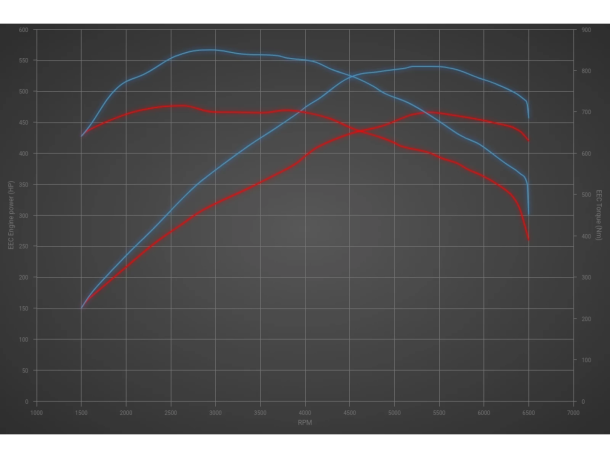
The question most customers ask is whether remapping is safe and whether tuning reduces engine life. The accurate answer is that safety and longevity depend on both engineering discipline and vehicle care. When the calibration follows the factory torque model and temperature, pressure, and turbo speed remain within design limits, durability stays consistent with normal use.
Just as importantly, how an owner drives and maintains the car matters: poor maintenance or constantly driving a cold engine can harm longevity even without tuning. Problems arise only when files disable protections, when the base vehicle is unhealthy, or when the car is pushed beyond its cooling capacity.

What Dyno-ChiptuningFiles does to protect reliability
-
We validate files on an eddy current dyno with steady state points and transient sweeps
-
We log key risk signals such as charge pressure, air mass, lambda or smoke index, rail pressure, ignition or injection timing, and exhaust temperature
-
We keep protections active and apply conservative limits for real-world conditions
-
We provide clear acceptance criteria so workshops know exactly what to verify before delivery
Practical answers to the most common questionsPractical answers to the most common questions
Is engine remapping legal in the UK
Yes, provided the vehicle remains roadworthy and retains its emissions control systems. The calibration must not disable emissions diagnostics or safety strategies and the car must be capable of passing its MOT when maintained correctly.
Do you have to declare an engine remap on insurance
Yes. Treat a remap as a material modification and inform the insurer. Encourage customers to do this before or immediately after the appointment. Provide supporting documents with the handover.
Is remapping an engine safe and is chip tuning safe for your engine
It is safe when the file respects the factory torque structure and all protections remain active. A poorly engineered file can push temperatures or pressures beyond intent or induce abnormal soot or knock, which is why validation matters.
What are the disadvantages of engine remapping
There are trade offs that must be explained professionally
-
Reduced hardware margin if an aggressive torque target is chosen without supporting upgrades
-
Higher thermal load during prolonged full throttle operation if the cooling system is already marginal
-
Increased driveline stress due to earlier and higher midrange torque
-
Administrative effort and potential premium changes with insurance
-
Warranty implications that vary by manufacturer and market
Does tuning affect engine life
When limits are respected and maintenance is correct, expected life remains acceptable for normal duty. Abuse, poor fuel quality, neglected servicing, or operation beyond the thermal envelope will shorten life whether the car is stock or tuned, although higher specific torque can accelerate wear if misused.
A compliance minded workflow for workshops
Adopt a repeatable process that manages technical and legal risk
-
Intake and inspection with a full fault code scan, service status check, and boost or smoke leak checks where applicable
-
Baseline measurement on a dyno or by structured road logs to document stock behavior
-
Installation of a Dyno-ChiptuningFiles file that preserves protections and maintains a coherent torque model
Post install validation with steady state points and transient checks plus a short road verification to confirm transmission and stability control behavior
Why workshops choose Dyno-ChiptuningFiles for compliant results
-
Certified programmers who work inside the factory strategy rather than switching off safety systems
-
Dyno tested files with clear logging targets and acceptance thresholds
-
Calibrations for performance towing or economy that retain emissions control functionality
-
Responsive technical support and custom options for specific hardware or duty cycles
Bottom line
Engine remapping is lawful in the UK when executed with care and when the vehicle continues to meet its regulatory obligations. Clients must declare the modification to their insurer. Safety and durability come from engineering discipline not from luck. Dyno-ChiptuningFiles supplies dyno validated files, clear documentation, and practical guidance so that workshops can deliver measurable results with confidence.