
How much horsepower can tuning add and what does it cost?
ECU tuning can significantly boost your car’s performance. Learn how much horsepower you can realistically gain, what it costs, and why professional tuning matters for safe, reliable results.
In this article
One of the most common questions surrounding ECU tuning is how much additional horsepower can realistically be achieved and what investment it requires. Professional tuners and experienced enthusiasts know that the answer depends on the engine type, its condition, and the limits set by the manufacturer. While tuning can provide impressive results, expectations need to be based on technical realities rather than exaggerated claims.
Realistic horsepower gains from tuning
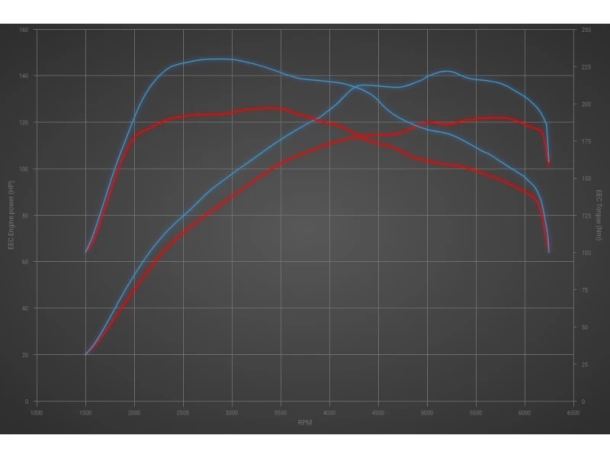
In modern turbocharged engines, ECU recalibration often unlocks significant extra performance. Gains of 20 to 40 percent are not unusual, as manufacturers typically build in safety margins and limit output to fit a wide model range. For example, a two liter turbocharged petrol engine producing 200 horsepower in stock form can often reach 240 to 270 horsepower after a well calibrated software adjustment.
Naturally aspirated engines respond differently. Without turbo pressure to increase, the ECU has less room for dramatic improvements. Gains of 5 to 10 percent are more realistic in these cases, which often means 8 to 15 additional horsepower on average sized engines. While smaller in absolute numbers, these changes still improve throttle response and drivability.
The role of a professional tune
A properly developed tune does more than just increase peak horsepower. Adjusting fuel maps, ignition timing, torque management, and boost control reshapes the entire performance curve. The result is stronger mid range power, smoother acceleration, and a more responsive driving experience.
Some drivers assume a “tune up” in the traditional sense, like replacing spark plugs or cleaning injectors, automatically increases horsepower. In reality, such maintenance restores lost performance rather than adding new output. Only ECU recalibration or hardware upgrades can provide a genuine increase beyond the original specifications.
The cost of ECU tuninG

Cheaper solutions such as generic plug in boxes or files downloaded without testing may seem attractive but carry risks. They rarely provide the same level of precision as a custom calibration and can even harm the engine if limits are ignored. For professionals, investing in dyno tested and certified files ensures both performance and reliability. See the full pricing breakdown here
Chasing bigger numbers
Some enthusiasts wonder how to add 100 horsepower to their car through tuning alone. While possible in certain turbocharged engines with large reserves, achieving such a figure usually requires supporting hardware upgrades. Examples include larger turbochargers, upgraded intercoolers, high flow exhaust systems, or reinforced fuel systems. Software calibration then integrates these components into a reliable package.
Without these modifications, expecting a simple software change to deliver an extra 100 horsepower is unrealistic. Professional tuners know that power gains must remain within the safe mechanical limits of the engine and drivetrain.
Affordable ways to increase horsepower
For those looking to maximize performance without large investments, ECU tuning remains the most cost effective method. It delivers the best ratio of horsepower gained per euro spent, particularly in turbocharged vehicles. Other affordable steps include optimizing intake and exhaust flow or ensuring the engine is in peak mechanical condition before tuning.
However, chasing the lowest price should never come at the cost of quality. A safe calibration developed with proper equipment and dyno validation is the foundation for long term performance gains.
Tuning can add substantial horsepower, but the outcome depends on the type of engine and the quality of the calibration. Turbocharged engines typically see the largest gains, while naturally aspirated ones improve more modestly. Costs vary, but professional tuning services provide safe and measurable results that outweigh the risks of cheap alternatives.
Adding 100 horsepower requires more than just software changes and usually involves hardware upgrades. For cost effective improvements, ECU tuning remains the most reliable path, provided it is carried out with precision and technical expertise.