
ECU flashing explained what it is and what it does
Learn what an ECU flash file is what ECU flashing does in practice and how Dyno Chiptuning delivers safe tested calibrations for professional use.
In this article
Professional tuners and workshops rely on ECU flashing every day. Reading and writing control units is now a core service in modern automotive environments. At the same time the terms ECU flash file and ECU flashing are sometimes used without a precise definition. For a professional environment that works with file services the details matter. You want to know exactly what you are programming and what effect it has on the vehicle.
Dyno-ChiptuningFiles works daily with complex engine and transmission controllers. Our programmers combine calibration experience with dyno validation so we can explain ECU flashing from a practical and technical perspective rather than from a generic marketing viewpoint.
What an ECU flash file actually is
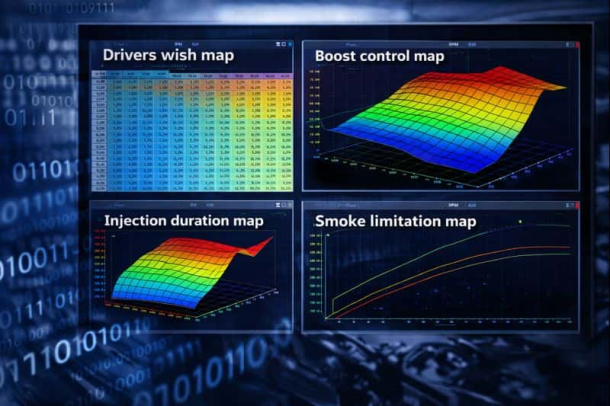
An ECU flash file is the software package that is written into the memory of the engine or transmission control unit during a flashing session. In practice this file can contain several distinct areas of ECU memory.
The most relevant parts for tuning are:
-
Program code that defines how the controller operates at logic level
-
Calibration or map data that defines the behaviour of the engine or gearbox
-
In some cases additional data blocks for configuration or immobiliser information
When you receive a tuning file from us you are receiving a modified version of the calibration section of the ECU flash file. The structural program code remains intact while the maps that govern torque fuel boost and protection strategies are optimised within safe margins.
So when someone asks what is an ECU flash file the concise answer is that it is the binary image that the flasher writes to the ECU to define both logic and calibration of the control unit.
What flashing your ECU does in practice
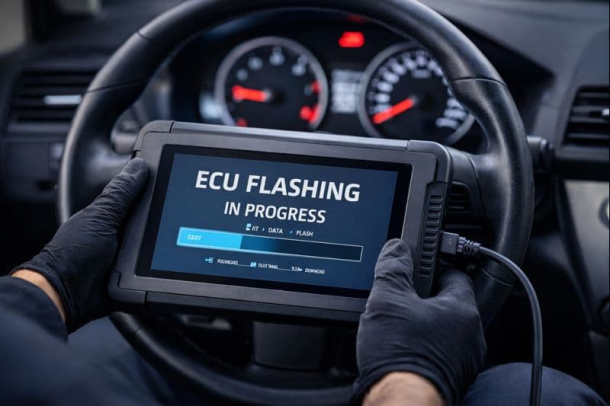
Flashing your ECU means that the original contents of the ECU memory are read stored and then replaced or updated with a new file. From a workshop standpoint there are several important effects that you need to control.
On a technical level the flashing process typically:
-
Loads a new calibration into the controller
-
Replaces the previous calibration blocks with the tuned version
-
Updates checksum and integrity values so the ECU accepts the software as valid
-
Sometimes updates manufacturer software to a newer base version before tuning
On a vehicle level the result of flashing with a professional tuning file can include:
-
A different torque and power delivery curve
-
Changes in throttle response and overall drivability
-
Adjusted boost pressure and fuel delivery within safe temperature and component limits
-
Potential improvements in fuel efficiency in specific operating conditions
When a customer asks what does flashing your ECU do the precise answer is that the flashing process itself is only the method of loading software. The real effect is determined by the quality and intent of the maps inside that file. This is exactly where the expertise of Dyno-ChiptuningFiles.com is critical.
How ECU flashing fits in the professional workflow
In a professional environment ECU flashing is not an isolated action but part of a controlled workflow that starts before the car is connected to the tool.
A typical process in a workshop that works withus looks like this:
-
Identify ECU type and software version through the diagnostic interface
-
Record relevant vehicle data such as modifications mileage and intended use
-
Read the original ECU file with a trusted tool and store it as a secure backup
-
Submit the original file and vehicle information to Dyno-ChiptuningFiles.com
-
Receive a calibrated tuning file that matches the hardware and requested result
-
Flash the ECU with the supplied file using correct power support and procedures
-
Perform a controlled test drive and basic checks for fault codes and drivability
At every step data is traceable so that future adjustments or diagnosis can be handled efficiently and repeatably.
Reading ECU files the right way

The quality of any ECU flash file depends directly on the quality of the original read. Reading an ECU file is more than pressing a button. The tool must use a protocol that retrieves the required memory regions reliably and without corrupting data.
A professional read should:
-
Capture all relevant memory segments that contain program and calibration data
-
Store the result in a binary file without conversion or editing
-
Be accompanied by clear information about ECU identification and read method
If an ECU read is incomplete or corrupted certain maps may be missing or misaligned which limits what a calibrator can do safely. In extreme cases the file may look correct at first glance but contain gaps or incorrect checksums that only become visible during flashing or driving.
We always recommend the use of established reading tools with correct protocols and provides support when a specific ECU requires a bench connection or direct connection rather than a simple diagnostic plug read. This prevents trial and error on sensitive control units and keeps risk under control.
ECU flashing and risk control
For professional users the main concern is not only performance but also risk management. A poorly executed flash can lead to no start situations or long term reliability issues that directly affect the reputation of your workshop.
Working with structured ECU flashing and reliable flash files reduces that risk. Verified checksums ensure the ECU sees the file as valid. Calibrations are developed with respect for hardware limits in terms of torque pressure and temperature. Known software versions and clearly named files make diagnosis and recovery simpler if a problem occurs. Clear procedures during reading and writing greatly reduce the chances of interruptions caused by voltage drops or communication faults.
Key points for risk control in daily practice are:
-
Use stable power support during every flash
-
Keep original backups and modified files strictly separated and clearly labelled
-
Maintain a simple but consistent file naming structure with vehicle and software identification
-
Document any hardware changes so later calibration updates can take them into account
We combine software knowledge with dyno measurements and data logging so that requested power gains are backed by measurement rather than assumption. This ensures that the promised result is not only felt on the road but also visible in recorded data.
How Dyno-ChiptuningFiles supports workshops with ECU flashing
Our fileservice platform is set up to integrate smoothly into the workflow of professional tuners and workshops. When it comes to ECU flashing our role is to deliver the technical foundation while you remain in control of the vehicle and customer contact.
We offer experienced programmers who work daily with a wide range of modern and older control units. You gain access to dyno tested base calibrations tailored to different use cases such as performance towing or efficiency focus. Communication around file requirements and read methods is clear and direct so your technicians know exactly what is expected during reading and writing.
Where necessary we support you when your flashing tool reports unusual behaviour or only produces partial reads so that the correct approach can be chosen for that ECU. Because the calibration work and checksums are handled by Dyno-ChiptuningFiles.com you can focus on efficient workshop execution knowing that the software side has been addressed professionally. That combination of structured software work and disciplined flashing procedure is what allows you to deliver consistent results to your customers.
Conclusion
ECU flashing is the process of writing a new software image to the control unit of the engine or transmission. The key concepts behind it are the ECU flash file and the calibration data that it contains. Flashing your ECU on its own simply replaces the content of the controller memory. The real value and risk lie in the quality of the file that is written.
For professional workshops and tuners that demand predictable results and long term reliability it is logical to separate reading and flashing on your side from deep calibration work on the file service side. By partnering with us you can offer your customers proven performance and well controlled calibrations while maintaining an efficient and repeatable flashing workflow in your workshop.