
How ECU Tuning Prices Work (Master vs Slave Explained)
ECU tuning prices are often misunderstood. Not because pricing is unclear, but because tuning files are sometimes compared to reusable software products. They are not. This page explains how ECU tuning pricing works at Dyno-ChiptuningFiles, with a clear and practical distinction between Master and Slave workflows.
In this article
ECU Tuning Is Always Priced Per File
Every ECU tuning file is created for one specific ECU configuration.
At Dyno-ChiptuningFiles, pricing is based on two factors only:
• Level of modification
• Credit type (Master or Slave)
Our pricing is not based on ECU brand, ECU type, read method, or encryption level.
Those elements affect the technical process, but not the price structure.
This ensures clear, predictable pricing and avoids unnecessary complexity.
Even vehicles that appear identical can require different calibration work.
That is why ECU tuning is always priced per file, not per vehicle model.
The Key Difference: Master vs Slave Pricing
The difference between Master and Slave pricing is not about quality.
It is about file usability and workflow.
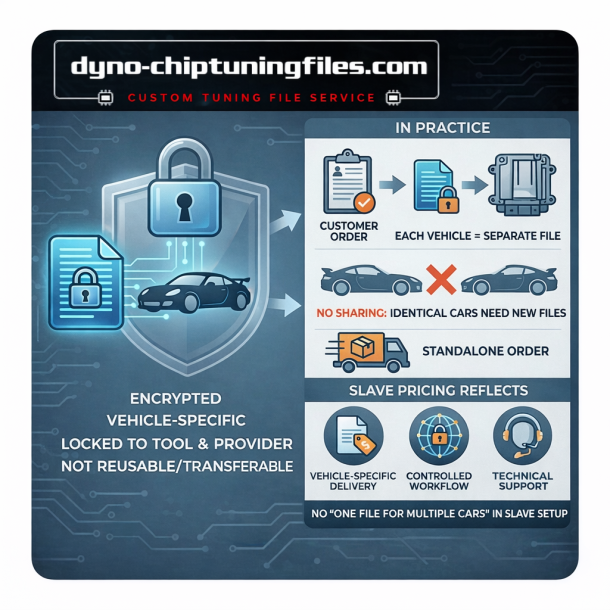
Slave Files: Vehicle-Specific and Locked
When using slave tools, tuning files are:
• Encrypted
• Linked to one specific vehicle
• Bound to the slave tool and provider
• Not reusable or transferable
What this means in practice:
Each vehicle requires a separate tuning file
Identical vehicles cannot reuse the same file
Each order represents a standalone delivery
Slave pricing reflects:
• Vehicle-specific file delivery
• Controlled and protected workflow
• Technical support after delivery
In a slave setup, there is no concept of “one file for multiple cars”.
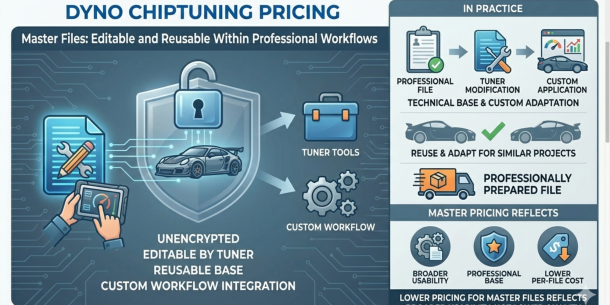
Master Files: Editable and Reusable Within Professional Workflows
With master tools, files are delivered unencrypted and can be edited by the tuner.
This allows:
• File analysis and modification
• Reuse or adaptation for similar projects
• Integration into custom tuning workflows
What this means in practice:
A master file can be used as a technical base
Adaptation and final application are performed by the tuner
Dyno-ChiptuningFiles delivers a professionally prepared and validated file
Both Master and Slave files are developed according to the same high-quality standards.
The price difference between Master and Slave files is based on file usability and the flexibility of the workflow, not on the quality of the file itself.
Credits and Pay-Per-File Pricing
Dyno-ChiptuningFiles works with a pay-per-file credit system.
This means:
• Each tuning file is ordered individually
• Credits correspond to modification level and file type
• No subscriptions or recurring fees
Credits make pricing transparent without turning ECU tuning into a generic product.
About Very Low-Cost Tuning Files
Extremely low pricing often indicates:
• Generic or reused files
• Limited validation
• Minimal technical support
The real cost often appears later as:
• Fault codes
• Driveability issues
• Time lost troubleshooting
Professional pricing reflects development, validation, and support - not just file delivery.
Where to Find Actual Prices
This page explains how pricing works, not exact amounts.
For a full overview of current ECU tuning prices and available credit options, visit our
*If you are unsure which file type fits your workflow, our team can assist you in choosing the right setup.
Summary
- ECU tuning is always priced per file
- Pricing is based on modification level and credit type
- Slave files are vehicle-specific and locked
- Master files offer flexibility within professional workflows
- Both file types follow the same quality standards
Understanding this prevents incorrect comparisons and unrealistic expectations.