
Bench vs OBD tuning: What's the difference and when to use each method?
Bench vs OBD tuning: the difference explained.
In this article
For professional tuners and workshops, choosing the right way to read and program an ECU is a crucial decision. The method determines not only the efficiency of the process but also the safety of the hardware and the reliability of the result. Modern ECUs are increasingly complex, with strict encryption and protection layers. This makes it important to understand when to use OBD tuning, when bench tuning is necessary, and in which cases the BOOT method is the only viable solution.
At Dyno Chiptuning Files, our certified programmers handle these challenges daily. Every calibration we provide is dyno tested, verified, and delivered with a focus on safety and performance. This article explains the core differences between OBD, bench, and BOOT tuning and outlines the right application of each method.
Understanding OBD tuning

OBD tuning uses the On Board Diagnostic port of the vehicle, usually located under the dashboard. With professional equipment, the ECU software can be read and new calibration data can be written directly through this port. For many vehicles, this is the quickest and safest approach, as it avoids removing the ECU from the car.
OBD is ideal when:
-
The ECU is supported by the tool and protocols.
-
The access allows both reading and writing of the necessary data areas.
-
Speed and minimal intervention are priorities.
The limitation is that not every ECU allows full access through OBD. Increasingly, manufacturers add security gateways or encryption that block direct communication. In such cases, the tuner must rely on alternative methods.
What is bench tuning?
Bench tuning means removing the ECU from the vehicle and connecting it directly to a programming tool via the original connector pins. This allows access to the firmware without depending on the OBD port.
The advantages of bench tuning include:
-
A more complete readout of the ECU, including firmware and maps.
-
The ability to program ECUs that are locked through OBD.
-
Recovery of ECUs that failed during an interrupted OBD write.
This method requires careful handling. The ECU must be safely removed, connected with the right pinout, and supplied with stable power. Bench tuning is slower than OBD but offers more control and is often the only professional solution when OBD is restricted.
The BOOT method in detail
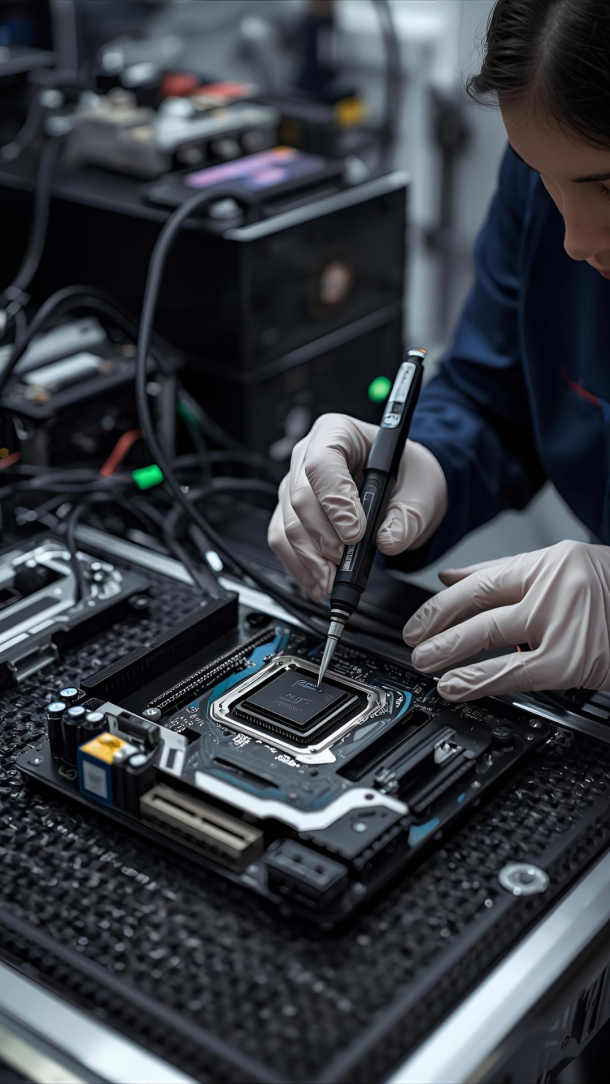
BOOT is a deeper level of bench access. Instead of using the ECU’s connector, the technician connects directly to the microprocessor or memory chip. The ECU is forced into a low level mode, unlocking full read and write access to every memory sector.
The BOOT method is applied when:
-
The ECU is heavily encrypted or fully locked.
-
A complete firmware recovery is required.
-
Standard bench protocols do not provide sufficient access.
Because BOOT involves direct contact with sensitive components on the ECU board, precision and expertise are critical. Without proper equipment and experience, there is a significant risk of permanent damage. At Dyno Chiptuning Files, we apply professional tools, anti static measures, and strict procedures to perform BOOT programming safely.
Bench vs OBD: which method to choose?
The decision between OBD, bench, and BOOT depends on the ECU type, the tool support, and the workshop’s objectives.
-
OBD is the first choice if the ECU is supported, as it is quick and minimally invasive.
-
Bench is used when OBD is blocked, when a complete firmware is needed, or when recovering a corrupted ECU.
-
BOOT is the last resort for locked ECUs or cases requiring low level access.
In practice, professional tuners often start with OBD. If that path is not available, they move to bench. BOOT remains the specialist method for the most complex scenarios.
Dyno-Chiptuningfiles.com expertise
Whatever method is used, the end result depends on the quality of the tuning file. At Dyno ChiptuningFiles.com , every file is created by certified EFI engineers and validated on our in house dyno. We combine the right programming method with tailored calibrations to ensure optimal results in power, drivability, and reliability.
Workshops and tuners who partner with us can trust that each ECU will be handled correctly, whether through OBD, bench, or BOOT. Our focus is on delivering consistent, proven outcomes that meet the highest professional standards.
Both OBD and bench tuning have a vital role in modern ECU programming, while the BOOT method provides a solution for the most complex cases. Understanding the difference between these methods allows workshops and tuners to select the right approach, ensuring safe communication with the ECU and reliable performance gains for the customer.
With our expertise, every method is applied with precision and backed by dyno tested results, giving professionals the confidence to deliver high quality tuning solutions.