
DSG tuning and reliability: what to expect from your gearbox
DSG tuning refines how your dual-clutch gearbox handles power, shifts, and torque limits. Learn how professional calibration by Dyno-ChiptuningFiles enhances performance and reliability without exceeding mechanical limits.
In this article
Modern performance vehicles rely heavily on the precision and control of dual clutch transmissions. The DSG (Direct Shift Gearbox), developed by Volkswagen Group and adapted by many manufacturers, combines automatic convenience with manual responsiveness. For professional tuners and workshops, understanding how DSG tuning works and how it affects reliability is essential. At Dyno-ChiptuningFiles, we specialize in developing custom, dyno tested ECU and TCU calibrations, ensuring that both engine and transmission operate in harmony for maximum performance and durability.
Can you remap a DSG gearbox?
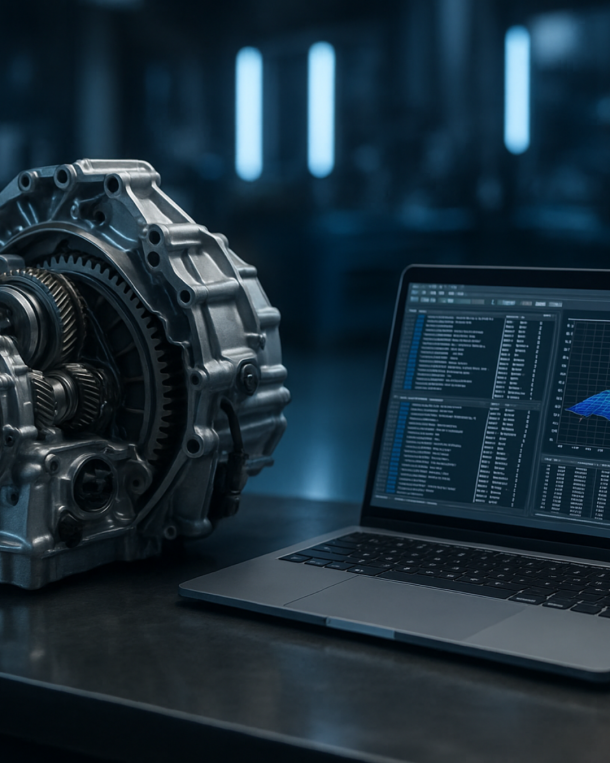
Yes. Just like an engine ECU, the DSG transmission control unit (TCU) can be remapped or recalibrated. DSG tuning allows control over the gearbox’s behavior, including shift points, clutch pressure, torque limiters, and launch control parameters.
When performed by professionals with the correct data and tools, TCU tuning offers measurable benefits. We develop gearbox calibrations that are fully synchronized with the corresponding ECU tune, ensuring the transmission can handle increased torque safely and efficiently.
Typical adjustments include:
-
Raising or optimizing torque limits to match tuned engine output
-
Modifying shift speed and timing for faster, smoother transitions
-
Adjusting clutch clamping pressure to prevent slip under higher loads
-
Refining launch control and gear engagement strategies
-
Improving overall drivability and response in both automatic and manual modes
These changes create a seamless integration between power delivery and transmission behavior, resulting in sharper performance and greater control without sacrificing reliability
What does DSG tuning do?
DSG tuning optimizes how the transmission responds to power and driver input. Factory calibrations are typically conservative, designed to suit a wide range of conditions, climates, and driver profiles. By contrast, professional tuning focuses on precision and performance.
A well tuned DSG offers:
-
Improved torque transfer: allowing the transmission to handle higher power levels safely
-
Faster gear shifts: reducing shift lag and improving acceleration
-
Smarter shift logic: optimizing gear selection during acceleration, cruising, or braking
-
Enhanced driver engagement: particularly in manual or sport modes
-
Better thermal management: through optimized clutch and pressure control maps
At Dyno-ChiptuningFiles, each DSG calibration is based on extensive testing, real world data, and dyno validation. The result is not only improved performance but also smoother operation and extended component life.
What are the disadvantages of the DSG gearbox?
While the DSG offers exceptional efficiency and speed, it has its technical limitations. The most common disadvantages relate to wear and thermal management.
Potential drawbacks include:
-
Clutch wear if torque limits are exceeded or tuning is performed incorrectly
-
Mechatronic unit sensitivity, especially to heat or contaminated fluid
-
Maintenance requirements, as the gearbox relies heavily on fluid condition and regular servicing
-
Limited torque capacity on certain versions, particularly early 7 speed dry clutch units
These disadvantages highlight why professional calibration and accurate torque management are essential. Dyno-ChiptuningFiles’s certified programmers ensure that every DSG tune stays within the mechanical and thermal limits of the gearbox, maintaining both performance and longevity.
What is the strongest DSG gearbox?
Among the DSG range, the strongest variants are typically the wet clutch designs, such as the DQ250, DQ381, and DQ500.
-
DQ250 (6-speed wet clutch): Used in many performance VW, Audi, and Seat models; reliable up to around 600 Nm with proper tuning.
-
DQ381 (7-speed wet clutch): Found in newer MQB platforms; capable of managing 550–600 Nm safely.
-
DQ500 (7-speed wet clutch): The most robust version, used in high torque vehicles like the Audi RS3 and VW Transporter; supports up to 700+ Nm when tuned correctly.
Dry clutch DSGs such as the DQ200 (7-speed) are lighter and more efficient but less tolerant of high torque loads. Proper calibration ensures these limits are respected. Dyno-ChiptuningFiles matches each TCU tune to the specific gearbox type and power target, preventing stress on the hardware while optimizing performance.
How much torque can a 7-speed DSG handle?
The torque capacity depends on the specific gearbox model:
-
DQ200 (7-speed dry clutch): Safe up to approximately 350 Nm
-
DQ381 (7-speed wet clutch): Safe up to approximately 600 Nm
-
DQ500 (7-speed wet clutch): Safe beyond 700 Nm with correct tuning
At Dyno-ChiptuningFiles, torque management maps are calibrated precisely to prevent clutch slip and mechatronic overload. This approach ensures that even with increased engine power, the transmission operates within its structural and thermal capabilities.
How long does the 7-speed DSG last?
With proper maintenance and calibration, a 7-speed DSG can last well over 200,000 kilometers. Longevity depends primarily on driving style, fluid change intervals, and torque management. Regular fluid replacement and correct temperature control are critical for long term reliability.
In tuned applications, maintaining conservative torque limits and clean operating conditions extends the lifespan of both the clutches and the mechatronic system. Dyno-ChiptuningFiles’s calibrations always prioritize smooth torque delivery and consistent pressure control, which significantly reduce mechanical stress and heat buildup.
Professional approach to DSG tuning
DSG tuning is not about pushing limits blindly, it is about refining control. A professionally calibrated transmission enhances both performance and reliability when supported by data, dyno validation, and certified programming expertise.
At Dyno-Chiptuningfiles.com, every TCU file is developed alongside its matching ECU tune to ensure total system balance. Adjustments are made using verified tools and tested through multiple dyno sessions under real load conditions. This integrated approach allows tuners and workshops to deliver results that are measurable, repeatable, and safe.