
ECU & Tuning Software Guide | Professional Insights
Learn how ECU software works, which tuning tools professionals use, and how to find software versions. A technical guide by Dyno-ChiptuningFiles
In this article
ECU and tuning software, how it works and what options are available
For professional automotive technicians and tuning specialists, the Engine Control Unit (ECU) is the primary point of interaction with a vehicle’s performance capabilities. Understanding the architecture of ECU software and the tools required to modify it is essential for delivering reliable, high quality results. At Dyno-ChiptuningFiles, we specialize in navigating these complex systems to provide precision engineered calibration files for our partners worldwide.
Understanding the role of ECU software
To understand how tuning works, one must first understand what ECU software does. Often described as the brain of the engine, the ECU software is a set of embedded instructions and data tables that manage every aspect of combustion.
The software operates in a continuous loop of input, processing, and output. It receives real time data from sensors measuring air intake, engine temperature, throttle position, and exhaust gases. Based on this data, the software determines the exact timing for fuel injection and spark ignition. Beyond these basics, modern ECU software also manages torque limiters, emissions systems, and boost pressure for turbocharged engines. It is designed with safety buffers to protect the engine across a wide range of global conditions, which is exactly where the opportunity for tuning lies.
Technical specifications and versions
Every ECU has a specific identity. When preparing for a remap, knowing exactly what software is currently running on the hardware is the first step toward a successful calibration.
What software do ECUs use?
In the automotive industry, ECUs generally run on highly specialized real time operating systems (RTOS). These are designed for stability and immediate response. For many modern European manufacturers, the software architecture follows the AUTOSAR (AUTomotive Open System ARchitecture) standard. This allows for a modular approach where different software components can communicate over a Controller Area Network (CAN).
How do I find my ECU software version?
Identifying the software version - often referred to as the box code or revision - is essential for matching the correct tuning file. There are several ways to find this information:
-
OBD Diagnostic Tools: Professional scanners such as Autel, VCDS (for VAG), or ODIS can read the ID of the ECU directly. This will provide the hardware part number and the specific software version (e.g., 8Y0 906 264 A with revision 0001).
-
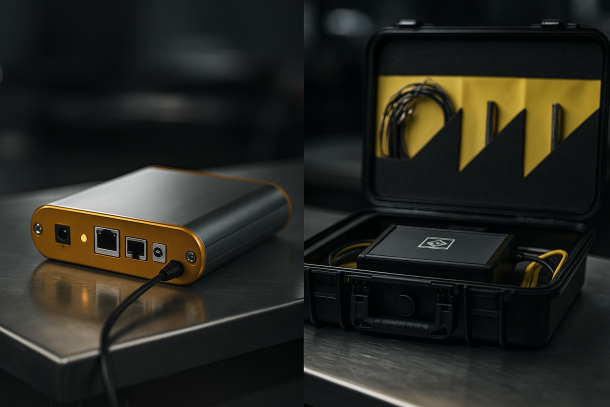
Tuning Interfaces: Tools like Autotuner, Alientech KESS3, or Flex will perform an ID check as the first step of the reading process, displaying the software version on the screen.
-
Physical Label: In some cases, the version number is printed on a sticker on the ECU housing, though the internal software may have been updated since the vehicle left the factory.
Software options for car tuning
The software used to tune an ECU is distinct from the software running inside the ECU itself. The tuning industry uses two main categories of software: reading/writing tools and map editing platforms.
Which software is used for car tuning?
The most respected software used for car tuning at a professional level includes:
-
WinOLS: This is the undisputed leader for professional file development. It is a binary editor that allows for the precise identification and modification of maps within the ECU data. At Dyno-ChiptuningFiles, our certified programmers utilize WinOLS to ensure every file is engineered with absolute accuracy.
-
ECM Titanium: Developed by Alientech, this software uses drivers to help tuners find specific maps (like torque, fuel, and boost) quickly.
-
Master/Slave Interfaces: Software like K-Suite or the Autotuner application handles the actual communication with the vehicle to read the original file and write the modified one.
Is there a free car tuning software?
While there are free options like TunerPro, they are generally aimed at hobbyists or older vehicles. Professional workshops typically avoid free software because it lacks the technical support, security, and frequent updates required to safely handle modern, high value vehicles. For a professional operation, the risk of using unsupported software far outweighs the initial cost of a licensed tool.
Why professional calibration matters
Because ECU software is so deeply integrated with the safety and longevity of the engine, using the right software to tune the ECU is only half the battle. The real value lies in the data within the maps.
At Dyno-ChiptuningFiles, we bridge the gap between complex software and real world performance. Our process involves:
-
Rigorous testing: Every software change is validated on our in house 4WD dynamometers.
-
Checksum correction: Ensuring that the digital signature of the software is correctly recalculated so the ECU accepts the file.
-
Continuous updates: As manufacturers release new ECU software versions, we update our file databases to ensure compatibility.
For the professional tuner, having access to the best software and the most reliable files is the foundation of a successful business. By partnering with Dyno-ChiptuningFiles, you ensure that every software modification you perform is backed by years of expertise and technical precision.