
Remapping and Insurance: A Guide for Professional Tuners
Understand the technical and legal realities of engine remapping and insurance. Learn why declaration and professional calibration are essential for compliance.
In this article
Will remapping affect your insurance?
In the professional tuning industry, technical excellence must always be matched by transparency and compliance. For automotive workshops and tuners using the services of Dyno-ChiptuningFiles, providing clients with accurate information regarding the administrative consequences of a recalibration is just as important as the performance gains themselves. A common point of discussion between tuners and vehicle owners is how an Engine Control Unit modification interacts with insurance policies and whether these changes are detectable by insurers.
The technical reality of insurance and engine modifications
A primary concern for many enthusiasts is whether remapping affect insurance. From a technical and legal standpoint, any modification that alters the performance or power output of a vehicle is considered a material change to the risk profile of the car. Consequently, an engine remap does indeed affect insurance. In most jurisdictions, insurance providers base their premiums on the factory specifications of the vehicle. When those specifications are enhanced, the insurer must be notified to ensure the policy remains valid.
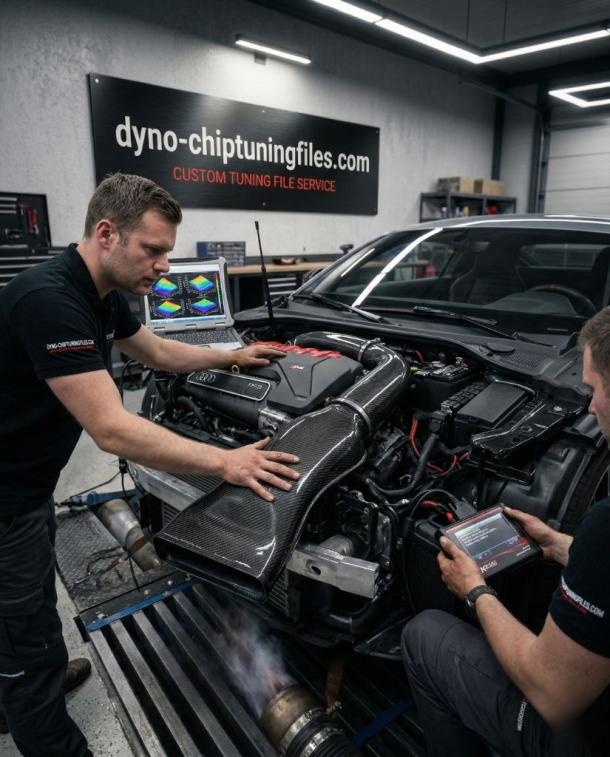
Do you have to declare engine remap on insurance?
The requirements regarding declaration depend heavily on the specific insurance provider and the local legislation of the country where the vehicle is registered. Because regulations vary globally, there is no single rule that applies to every situation. Generally speaking, many insurance frameworks require policyholders to disclose any material modifications that alter factory specifications. Failing to do so could influence coverage in the event of an audit, depending on local policy conditions. At Dyno-ChiptuningFiles, we advise workshops to encourage their clients to check their local terms and conditions to ensure they remain fully compliant with their specific provider.
Can insurance companies detect a remap?
A frequent question directed at professional workshops is: can insurance tell if a car is remapped? With the advancement of diagnostic technology, detecting a software modification has technically become much easier. However, whether an investigation is actually initiated depends entirely on the situation. In everyday practice, standard roadside checks or routine vehicle inspections rarely look for software alterations. However, in exceptional scenarios—such as severe accidents involving substantial liability or high financial claims—specialized third-party forensic experts or manufacturer technicians may be brought in to audit the vehicle's electronic data.
How experts check for remaps When a detailed technical audit is requested by authorities or investigators, specialized external experts can detect a remap through several methods:
-
Flash Counters: Many Bosch and Continental ECUs feature an internal counter that records every time the software is written. If the counter exceeds the official manufacturer service records, it indicates an aftermarket modification.
-
Log Data Analysis: Investigators can audit historical data logs and freeze-frame data, such as peak boost pressure, fuel flow rates, and torque values. If these values exceed factory safety limits, it provides clear evidence of a recalibration.
-
Checksum Verification: Every software file has a unique digital signature, calibration verification number (CVN), or checksum. By comparing the current checksum against the official manufacturer database, an expert can instantly tell if the software has been altered.
-
Diagnostic Port Audits: Using professional diagnostic and master/slave tools, specialized automotive investigators can read the software via the OBD port or directly from the ECU to verify its authenticity.
The consequences of non disclosure
Can you get away with not declaring a remap? While some may attempt to hide the modification, the risks far outweigh the potential savings on a premium. If an insurer finds out about a remap after an incident, they may void the insurance policy entirely. This means the driver could be held personally liable for all damages, including third party costs, which can reach hundreds of thousands of Euros or Dollars in serious accidents.
Will remapping void my insurance? It will only void the policy if it was not declared and the insurer discovers the modification during a claim investigation. If the remap is declared and accepted by the insurer, the policy remains a solid legal contract.
Why professional files matter for compliance
Using high quality, dyno tested files from Dyno-ChiptuningFiles provides a level of precision that is beneficial when dealing with insurance and manufacturer warranties. Because our certified programmers focus on safe, reliable power increases, the vehicle remains within a predictable performance envelope.
-
Documentation: Providing a customer with a dyno graph from a professional calibration session gives them a concrete document to present to their insurer, showing exactly what the new power and torque figures are.
-
Reliability: A professional remap is less likely to cause mechanical failures that would trigger a complex insurance investigation in the first place.
-
Reversibility: Professional tuning files can be reverted to the original factory settings if the vehicle needs to be sold or returned to a stock configuration, although the flash counter history may remain.
Final considerations for tuners and workshops
For the professional tuner, it is vital to inform customers that they should never attempt to bypass insurance requirements. The question is not just whether insurers check for remaps, but rather how to maintain a professional and legal operation. By using the expert services of Dyno-ChiptuningFiles, you provide a product that is engineered for excellence, allowing your clients to enjoy their enhanced vehicles with the peace of mind that comes from proper documentation and high quality engineering.